
Peru is one of those destinations where souvenir shopping is almost part of the experience. Between colourful markets, small artisan shops and stalls filled with textiles, pottery and handmade goods, there is plenty to tempt you.
And while you will have no trouble finding the usual Peru t-shirts, llama keychains and Machu Picchu magnets, there are also some beautiful locally made products worth making room for in your suitcase.
With so much to see, most trips to Peru include several different stops. If you are still planning your itinerary, Peru vacation packages can make it easier to combine places like Lima, Cusco, the Sacred Valley and Machu Picchu into one trip. And the more places you visit, the more opportunities you will have to find locally made souvenirs along the way.
I always prefer souvenirs that either remind me of something we experienced on a trip or that we can actually use when we get home. In Peru, that might mean a soft alpaca scarf, a bag of locally grown coffee or a colourful textile made by a local artisan.
If you are wondering what to buy in Peru, here are some of the best Peru souvenirs to keep an eye out for.
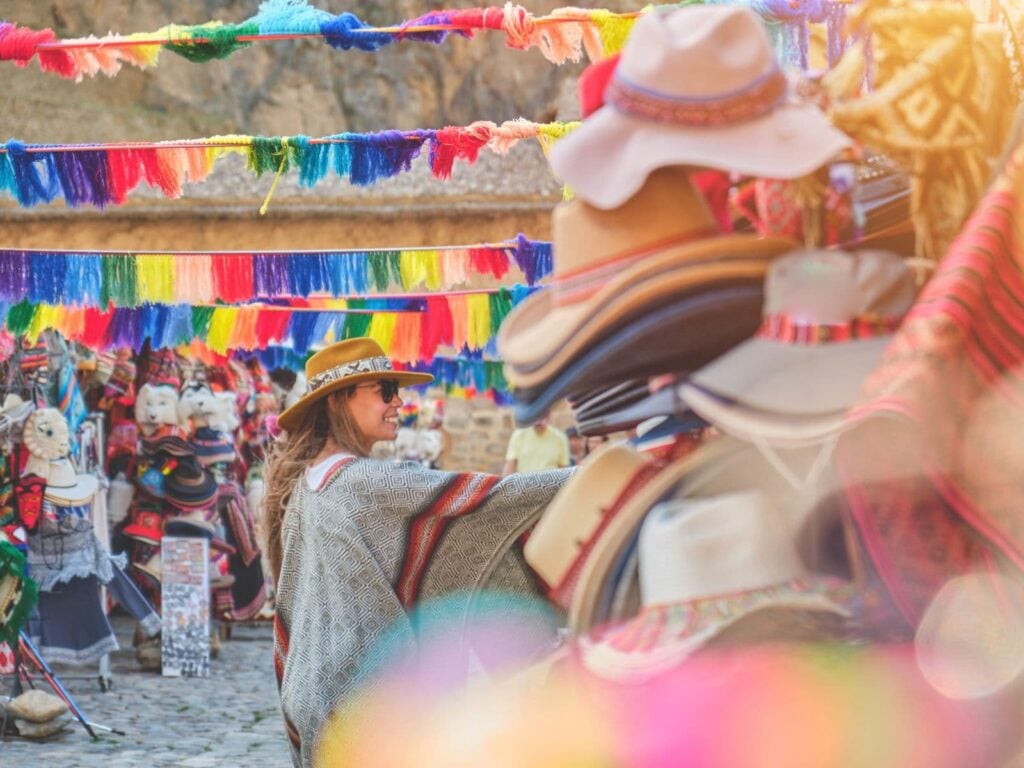
Top Peru Souvenirs to Keep Your Eye Out For!
Alpaca Wool
Alpaca products are probably one of the first things you will notice when you start souvenir shopping in Peru.
You will find sweaters, scarves, hats, blankets and just about anything else that can be made from wool.
If you want something you will actually wear at home, a scarf or sweater is an easy choice. They are also relatively easy to pack, which is always something I think about before buying souvenirs.
Quality can vary significantly, though. Not everything advertised as alpaca is necessarily 100% alpaca, especially in heavily touristed markets. If quality matters to you, shop at a reputable store or cooperative and ask about the material before buying.
Peruvian Textiles
The colourful textiles are one of my favourite things to look at in Peru.
Traditional weaving has a long history in the Andes, and different communities have their own colours, patterns and techniques.
You will find everything from blankets and table runners to bags, pillow covers and small woven pieces.
If you don’t have much room in your suitcase, look for something small and flat. A colourful textile or table runner takes up almost no space and is much easier to get home than another piece of pottery.
Buying directly from artisans or community cooperatives is also a great way to make sure more of your money stays within the communities producing the work.
Peruvian Coffee
If you are a coffee drinker, leave some room in your suitcase for Peruvian coffee.
Coffee is grown in several regions of Peru, and bags of locally grown beans make an easy souvenir to bring home.
Rather than grabbing the first bag you see at a souvenir shop, look for coffee from a local roaster or café that you enjoyed during your trip. Then the coffee reminds you of an actual place or experience rather than simply being something with “Peru” written on the package.
It is also one of the easiest gifts to bring home for friends and family.
Peruvian Chocolate
Chocolate is another easy edible souvenir from Peru.
Peru grows cacao, and you will find locally produced chocolate in shops and markets throughout the country.
Look for bars that identify where the cacao was grown or try a few different varieties while you are there and bring home your favourite.
Chocolate doesn’t take up much room in your suitcase and makes an easy gift. Just remember that if you are traveling somewhere hot before heading home, you probably don’t want to leave it sitting in your luggage all afternoon.
Chullo Hats
The colourful Andean chullo is one of the most recognizable souvenirs from Peru.
These knitted hats have earflaps and traditionally come in colourful patterns. You will see them throughout markets in places such as Cusco and the Sacred Valley.
If you are actually going to wear one when you get home, it can be a fun and useful souvenir. They are particularly practical if your Peru itinerary includes chilly mornings at higher elevations.
As with other textiles, look for locally made versions rather than the cheapest mass-produced option you can find.
Peruvian Pottery
If you have enough room in your luggage, pottery can be a beautiful souvenir from Peru.
You will find colourful bowls, plates, mugs and decorative ceramics, along with pieces inspired by traditional Peruvian and Andean designs.
I love bringing home something we can actually use. A serving bowl that comes out every time you have friends over is going to remind you of Peru much more often than something that sits in the back of a closet.
The downside, of course, is getting it home in one piece. Have anything fragile wrapped carefully and pack it in the middle of your suitcase surrounded by clothing.
Local Art and Prints
If you want something colourful without worrying about breaking pottery, look for artwork from a local Peruvian artist.
Markets and galleries are filled with paintings and prints featuring everything from Andean landscapes and llamas to Cusco’s streets and Machu Picchu.
Small prints are one of my favourite souvenirs because they are lightweight, flat and easy to bring home.
If you find an artist whose work you love, buy directly from them when possible. You will end up with something much more meaningful than a mass-produced print from a souvenir store.
Pisco
If you enjoy bringing home a bottle from your travels, pisco is the obvious choice in Peru.
This grape-based spirit is used to make Peru’s famous pisco sour, so bringing home a bottle means you can attempt to recreate one when you get home.
Look for a bottle from a producer you tried during your trip rather than choosing based purely on the label.
Just remember that liquids need to go into checked luggage if you are flying, and check the alcohol allowance for your home country before buying several bottles.
Where to Buy Souvenirs in Peru
You will have plenty of opportunities to shop for souvenirs in Peru, especially if your trip takes you through Lima, Cusco and the Sacred Valley.
Markets are an obvious place to start. They are fun to wander through and you will find textiles, hats, bags, artwork and plenty of smaller souvenirs.
For higher-quality alpaca products, pottery or textiles, I would also look at artisan cooperatives and locally owned shops. You may pay more than you would at a tourist market, but you can usually learn more about where the product came from and who made it.
Cusco is particularly easy for souvenir shopping because there are shops and markets throughout the historic centre. If you are visiting smaller communities in the Sacred Valley, keep an eye out for opportunities to buy textiles and handicrafts directly from local makers.
For coffee, chocolate and other edible souvenirs, don’t overlook grocery stores, cafés and specialty food shops. Some of my favourite food souvenirs come from places where locals actually shop rather than dedicated souvenir stores.
Peru Souvenirs I’d Skip Next Time
I would skip most of the generic mass-produced Peru souvenirs that you will see repeated from shop to shop.
If you want a llama souvenir because it makes you smile, absolutely buy the llama. But with so many beautiful textiles, locally made products and edible souvenirs available, I would rather spend my money on something that feels connected to the people and places we encountered during the trip.
I would also be cautious about extremely cheap “alpaca” products. If you are buying something specifically because you want genuine alpaca wool, ask what it is made from and buy from a reputable seller.
And unless you have plenty of luggage space, think carefully before buying anything huge. A colourful blanket may look incredible hanging in a Cusco market, but a scarf, small textile or piece of art is much easier to carry around Peru and eventually get home.

Lindsay Nieminen hails from Vancouver, Canada and shares her love of travel on this website. She is passionate about showing others that they should not put off traveling the world just because they have children or are single parents. She aims to encourage them to seek out adventure, whether it is at home or abroad by providing information on how just about everywhere can be a destination to explore as a family.